Women are at the heart of family farming, food production and life in rural areas. They are the custodians of knowledge and practices, the guardians of seeds, the builders of networks of solidarity, and the driving forces behind many of the social and political changes that have shaped the rural world. However, all too often, their work, their knowledge and their demands remain overlooked or are not sufficiently valued.
The URGE project – Cultivating Equality: Rural Women, Food Systems and Agroecology in the Iberian Peninsula – was launched with the aim of raising awareness of the perspectives, experiences, knowledge and demands of women farmers. The project places women farmers at the heart of research and action, recognising their fundamental role in family farming, food systems and the sustainability of rural areas. It aims to contribute to a greater appreciation of their work and knowledge, strengthening their voice in the debates and decision-making processes that affect rural areas and the future of food.
To this end, we aim to bring together women farmers, associations, co-operatives, organisations and movements linked to family farming, agroecology, feminism and food systems, creating spaces for dialogue, learning and collective action based on the experiences, priorities and proposals of the women farmers themselves.
This first URGE meeting is intended to be a space for listening, reflection and collective action, in which women farmers will play a central role. The meeting aims to create the conditions for sharing experiences, identifying common challenges and collectively developing proposals for fairer, more sustainable and more inclusive food systems and local communities.
We also hope that this meeting will help to chart the course for the project’s future research and activities, including the organisation of a possible Agroecological Caravan in Portugal, focusing on the practices, initiatives, knowledge and demands of women farmers and rural women.
During the meeting, we will:
- To share experiences and practices in agroecology and family farming led by women farmers;
- To reflect on the challenges currently faced by women in family farming and in rural areas;
- To identify the demands and policy changes that the participants consider to be priorities;
- To learn about initiatives, networks and examples of collective organisation driven by women;
- To map out projects, knowledge, practices and struggles that need to be made more visible;
- To work together to build the future Agroecological Caravan;
- To identify possible itineraries, areas, experiences and key figures that the Caravan might encounter, visit and raise awareness of.
The Agroecological Caravan aims to be a collective process of coming together, learning, raising awareness and taking action, built upon the proposals and priorities of the participating women farmers. As it travels through different rural areas, it will seek to highlight their experiences, their knowledge and their contributions to family farming, agroecology and food systems, whilst also helping to develop proposals for transforming public policies, local areas and food systems.
Because fostering equality also means recognising, valuing and strengthening the role of women farmers in shaping the future of our territories.
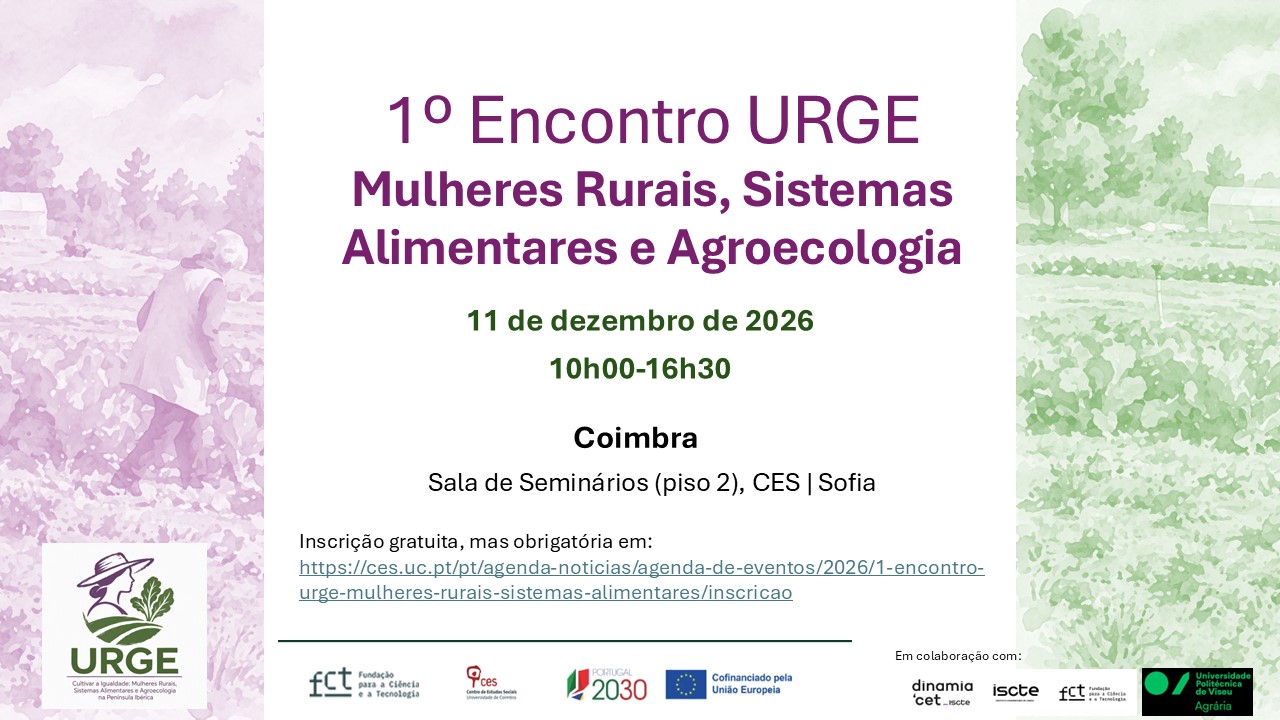
Free to attend, subject to prior registration.
This event will be held in Portuguese, without professional interpretation.
Programme
10:00-10:30 | Welcome, introduction of the participants and the URGE project
10:30-12:30 | Roundtable Discussion: Women farmers, agroecology and the future of food systems
12:30-14:00 | Lunch
14:00-16:15 | What sort of agroecological caravan do we want to build? Experiences, local areas and proposals from women farmers
16:15-16:30 | Concluding remarks and next steps
Registration is free, but compulsory at: